Ten Stunning Canadian Landscapes That Reconnect Us With Nature Nature Canada

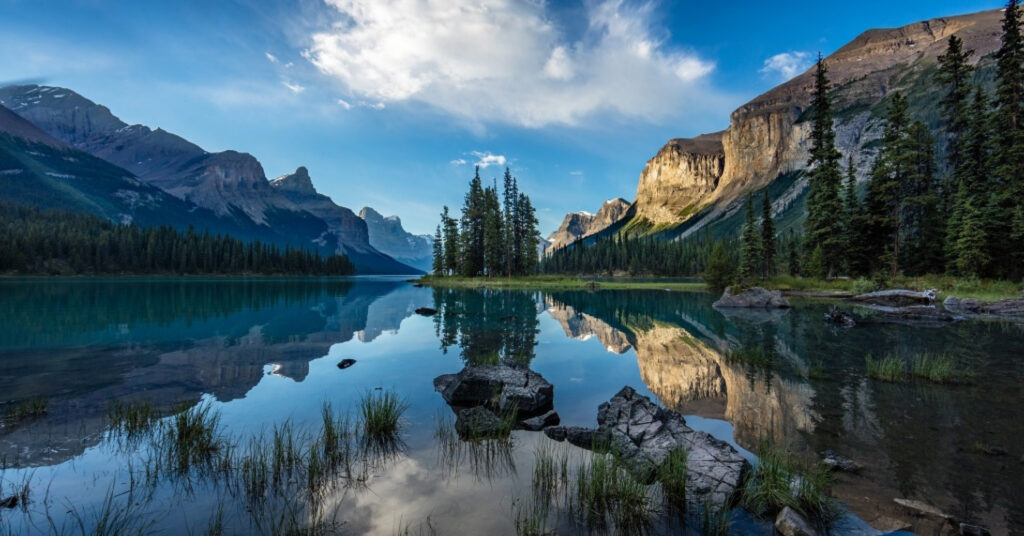
Canada’s breathtaking landscapes are woven into the fabric of our national identity. From the far reaches of our north, to our diverse coastlines, to the tranquility of lakes to majestic mountains and everything in between. This year, we’re celebrating the incredible beauty that defines us as Canadians by sharing some of our favourite photo submissions from past contests. Each photo captures the wonder and wildness of our great open spaces.

What better way to celebrate than to get outdoors and experience our incredible wilderness!

Our second early bird draw for photo submissions closes on August 1st! Submit your photos before midnight August 1st, 2026  for a chance to win our early bird prize!

For inspiration, (or simply for your viewing pleasure!), here are 10 stunning photos submitted to our previous photo contests.

Elliston, Newfoundland Photo submission by Stuart Hendrie
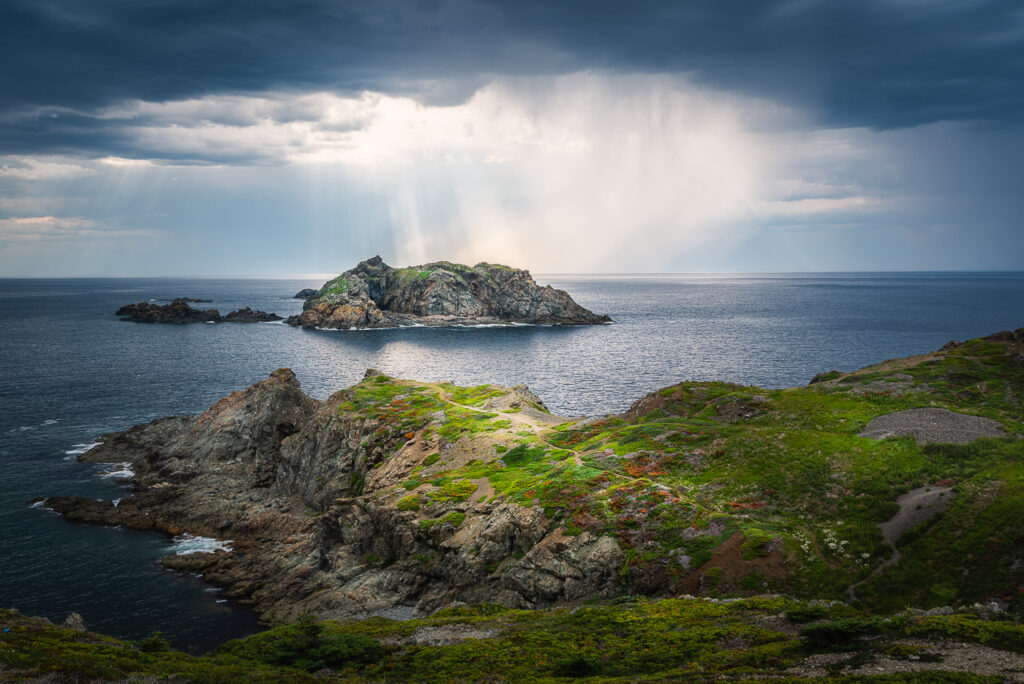
From the photographer: “This photo was captured in the summer of 2022 while on a two-week vacation in Newfoundland. I found the Newfoundland coastline to be stunning and could have stayed at this location for days. Huge cliffs, beautiful ocean views, everywhere you turn you feel like you are in some sort of epic medieval movie set. In addition to the stunning views, Elliston is also well known for viewing Puffins. As you venture further out into the cliffs, you are greeted by dozens of Puffins that seem to be completely comfortable with people and will walk right up to you if you sit quietly and just watch them go about their day.”

“Prairie Crocus” Photo Submission by Katie Singh
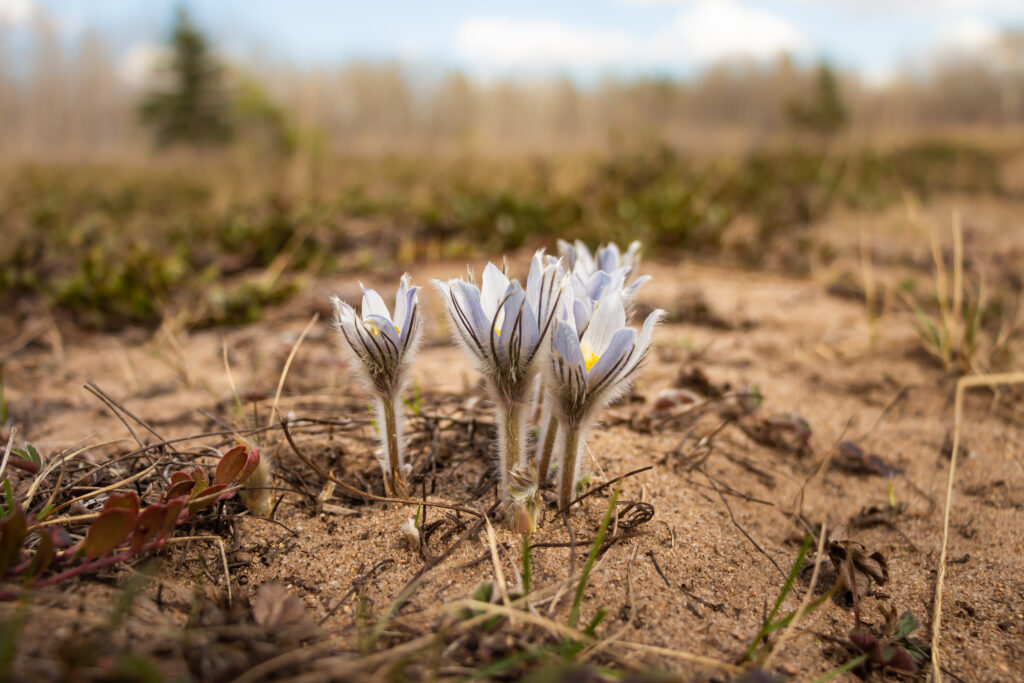
The crocus is one of the very first signs of winter’s close across Canada. Sometimes seen pushing up through the snow, the crocus is a harbinger of warm days ahead – very good news in the sometimes frigid March and April months. Prairie Crocus (Anemone Patens) is a particularly celebrated buttercup – it was assigned the official flower of Manitoba in 1906. As an early spring bloom, the flower is an essential source of pollen for early pollinators. When the Prairie Crocus fades and turns to seed, it is a food source for American Goldfinches and Blackbirds.

While this image isn’t technically a landscape, it captures the beauty of Canada’s prairie wilderness. Sometimes it’s the smallest details that tell the biggest story. What are the special ‘little’ things that make up the ‘big’ picture of your local landscape? Submit your photos here and let us know what makes them an important part of the scene.

“Mt. Edith”, Jasper, Alberta Photo Submission by Neal Weisenberg
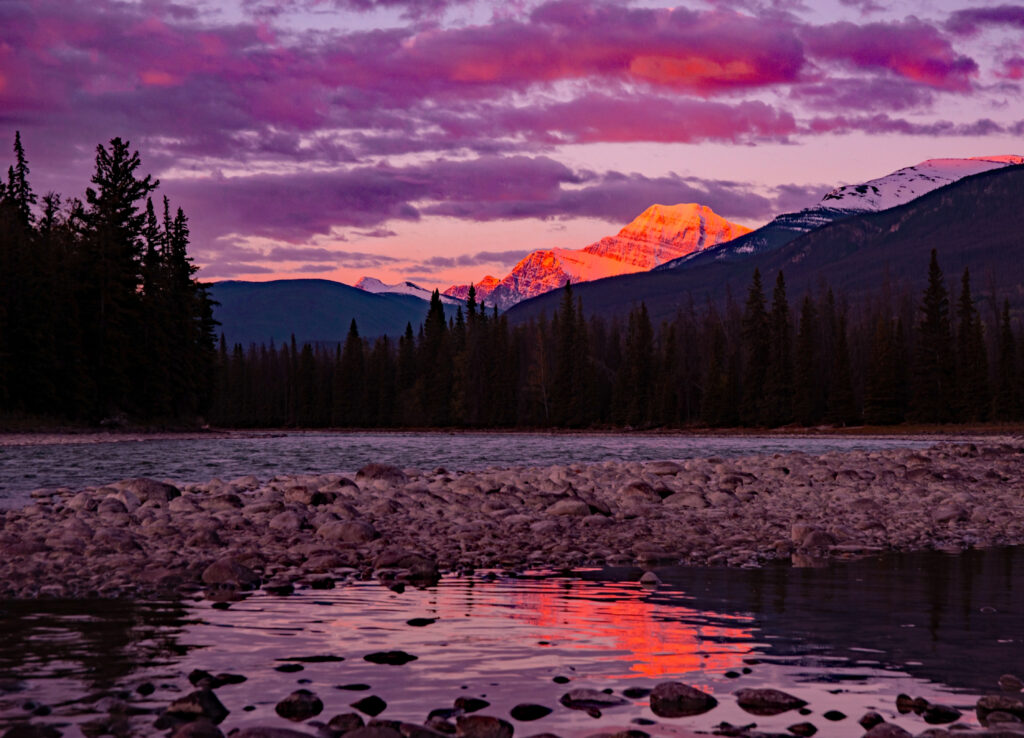
From the photographer:“This scene greeted me as I drove in early morning pre-dawn light on a back road adjacent to the Athabasca River in Jasper Park [that] Spring. The right combination of clouds and light catching the very high Mount Edith Cavell created a magnificent reflection in a pool along the edge of the Athabasca River.”

Neal Weisenberg’s capture of the magnificent Mount Edith Cavell just before dawn reminds us that if we get up just a little earlier, we can get out and find the magic.

In the Canadian Rockies, just over 23,000 square kilometers are protected national parks. Jasper National Park spans over 11,000 square kilometers. In the devastation of the 2024 wildfires, Jasper is still being rebuilt. The park is open to visitors, but please stay up to date while planning your visit.

Cape Breton Island Forest,” Nova Scotia Photo submission by Curtis Dauphney
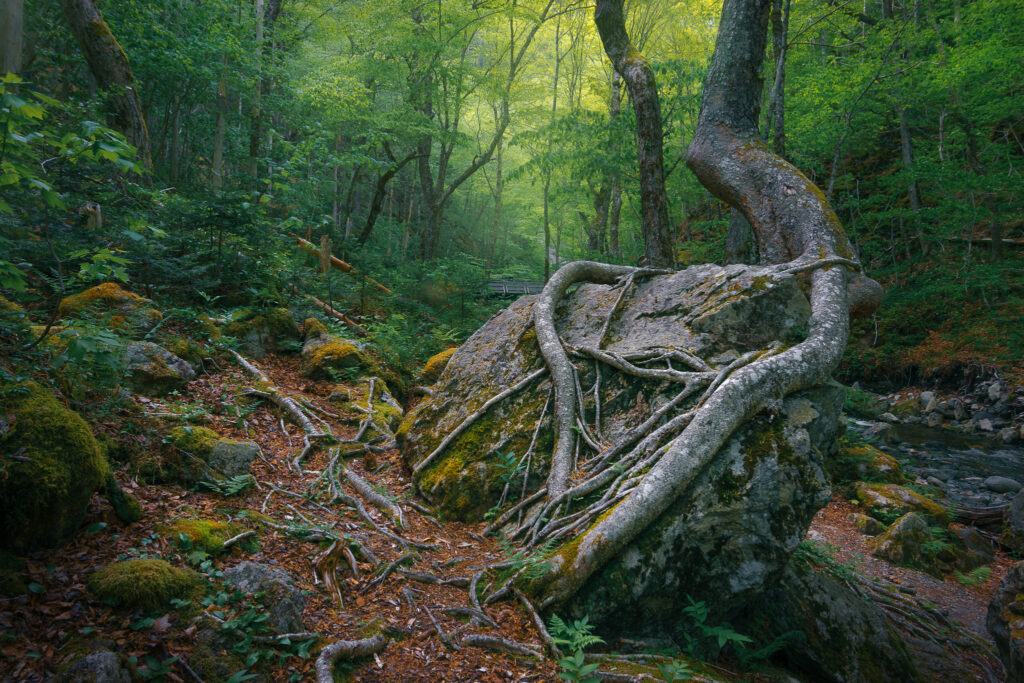
Cape Breton Island is home to an incredible array of biodiversity. The stunning terrain hosts three types of forest ecosystems: Acadian (valleys and lower slopes) and a mix of Boreal (highland slopes) and Taiga (exposed plateaus), all of which are ‘met’ by the vast North Atlantic Ocean and Gulf of St. Lawrence. The many-tiered forest and varying landforms offer a valuable habitat for over 200 species, including seabirds, Forest Songbirds, and Birds of Prey.

Curtis Dauphney’s incredible image captures the lush forest teeming with life and inviting the viewer to explore the rugged trails that lead to epic waterfalls, high peaks that tower above vast valleys, and elevated tundra-like terrain.

“Frozen in Motion”, Northwest Territories Photo Submission by Jay Frandsen
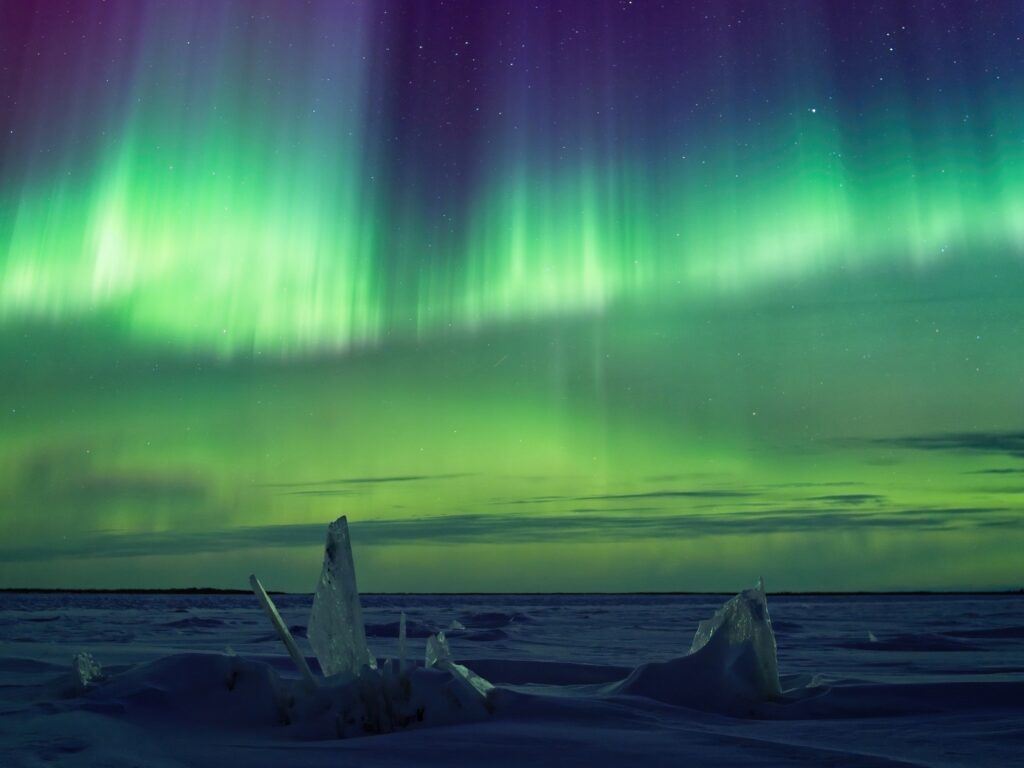
From the photographer:“While scouting for the Northern Lights along the Mackenzie Delta Ice Road, which links the communities of Inuvik and Aklavik, I came across a pressure ridge where shards of translucent ice had been thrust above the windswept snow. That night, a solar storm energized Earth’s atmosphere, unleashing a vivid display of aurora borealis. In this photograph, the ice shards offered a striking foreground, catching and refracting the green glow of the northern lights behind them — an interplay of earthbound ice and celestial light.”

Paddling in the Rain, Ontario Photo submission by Terri Harrigan
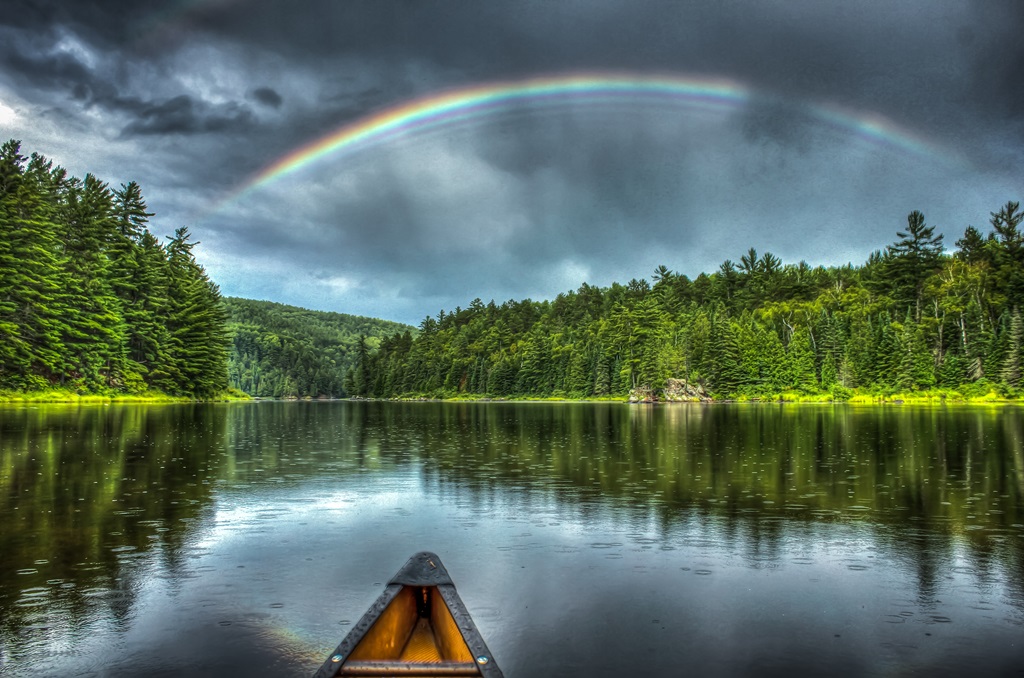
There are few things in life that can bring about the feeling of the calmness of a still lake  — couple that with a lucky rainbow, and you have a winning moment. Terri Harrigan’s photograph brings joy and calm — the epitome of wonder. Canada is home to a vast number of lakes — so many, in fact, that it holds 62 percent of all the lakes in the world that are 10 hectares or larger. From big lake to small, from dockside or atop a boat, we would love to see your photos of the lake you connect with most.

Nature’s Sculpture, Newfoundland Photo Submission by Bruce Raby
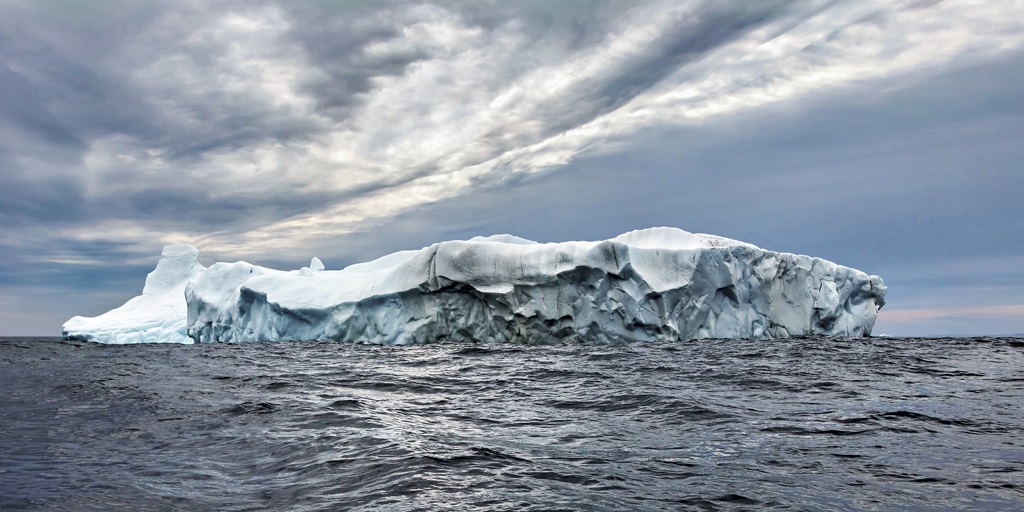
From the photographer: “In the spring of 2023, we visited Newfoundland hoping to photograph icebergs. We made our way up the northern peninsula to Saint Anthony Bight, a community of about 120 people. The afternoon of our arrival, we were on the water along with other passengers heading out to sea to get up pretty close to a number of icebergs slowly drifting south. There is something magical about these nature-made sculptures with their unique shapes, varied sizes, magnificent blue colours, dark lines, and textures that range from craggy to smooth and polished.”


Mount Robson, British Columbia Photo submission by Arthur Stanisz
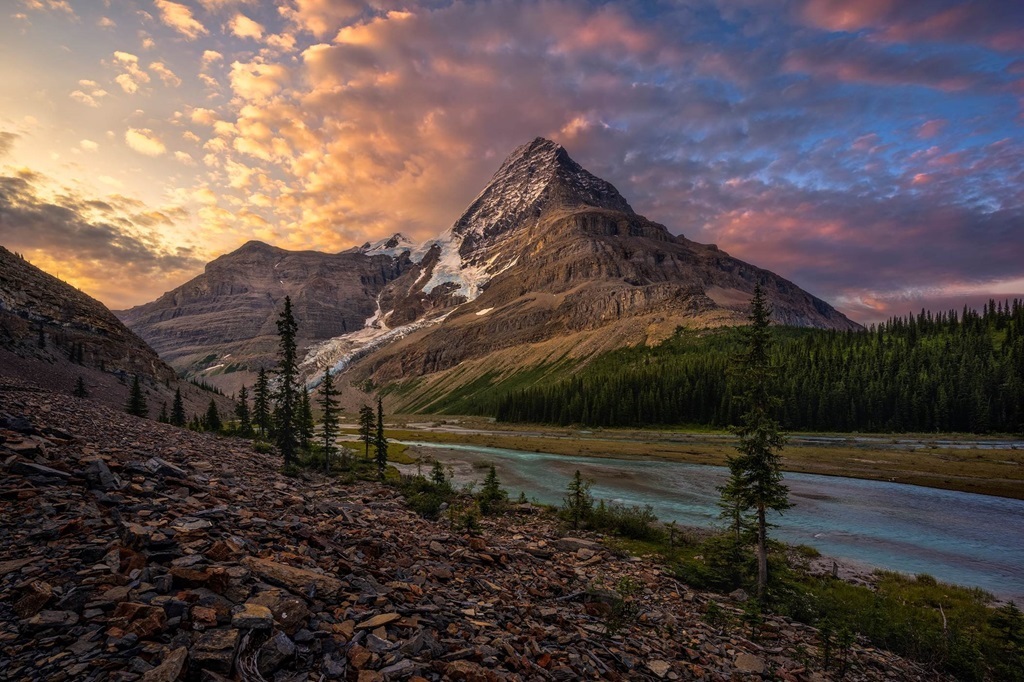
The Rocky Mountains stretch over an expanse of 4800 kilometres and, and some points, as wide as 650 kilometres. In Canada, we are lucky enough to call about 1600 kilometres of the Rockies home. This epic photograph invites us to take a moment, sit back, and appreciate the pristine presence of Mount Robson in British Columbia. In the bustling day-to-day of our busy lives, it is refreshing at the deepest level.

From high peaks to colourful valleys, why not submit your favorite mountain vista to our photo contest?

Flowerpot Island, Ontario Photo Submission by Kyle Noonan
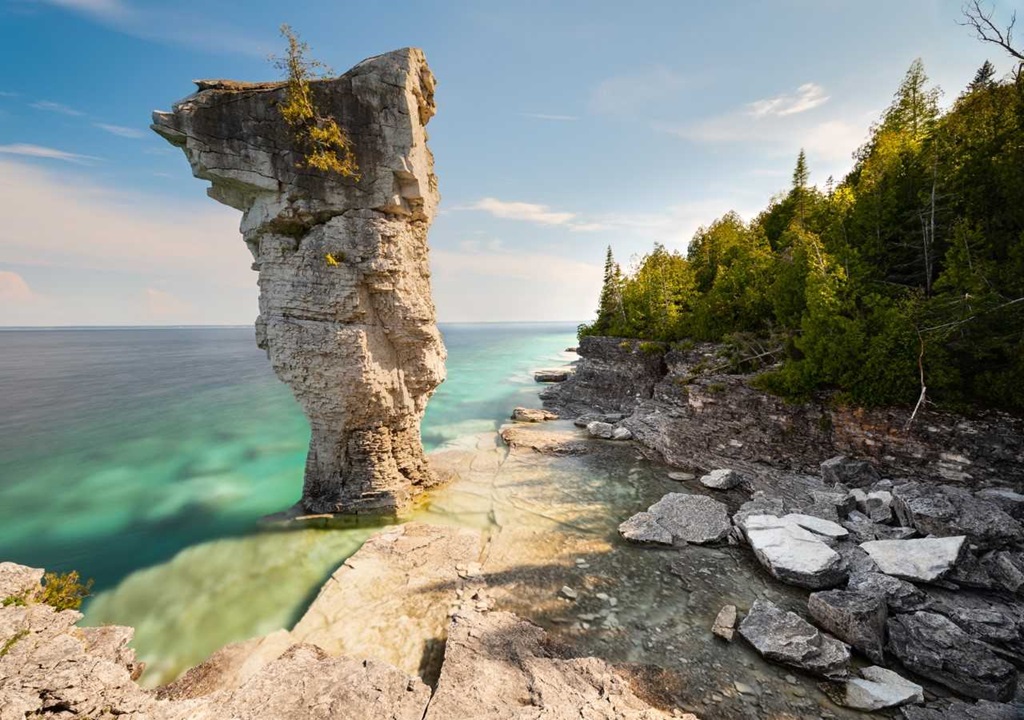
From the photographer: “After arriving late to the harbour of Tobermory and taking the ferry to Fathom Five National Marine Park’s Flowerpot Island, I was fortunate enough to have a serene half hour almost entirely alone wandering the pathways and shoreline of this Ontarian oasis. I ended my day sitting on the rocky shores of the island, as the late afternoon sun shone directly on one of the island’s iconic ‘Flowerpot’ sea-stacks.”

Unique formations are all around us here in Canada. We would love to see your most interesting landscape you’ve come across!

Waterton Wildflowers, Alberta Photo Submission by Lynn Rust
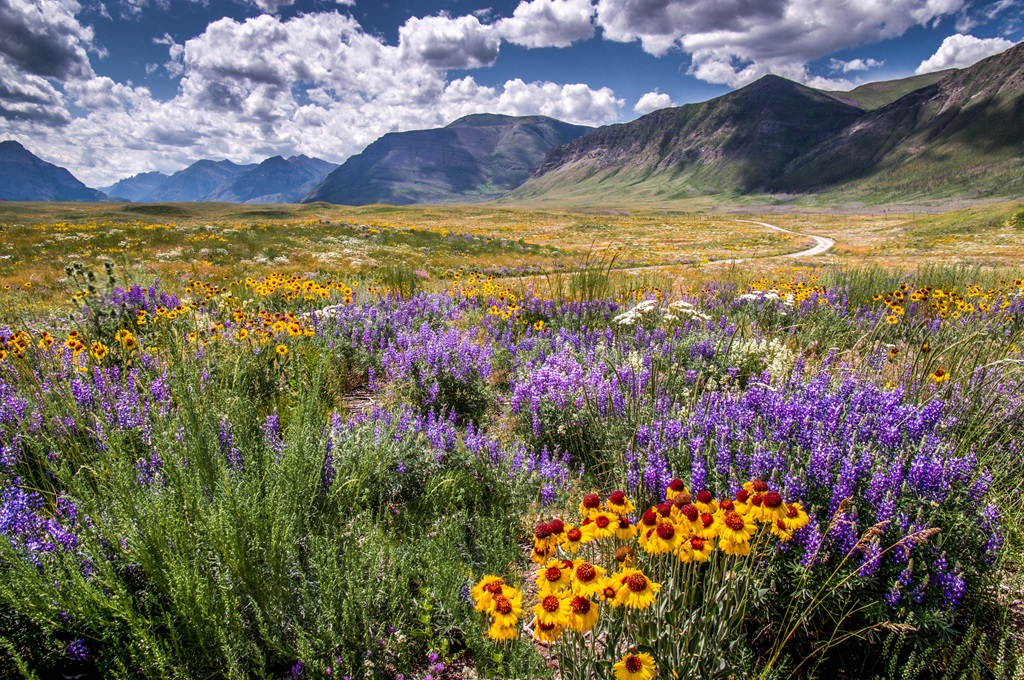
From the photographer: “One of Waterton National Park’s attractions is its wildflowers in the late spring and early summer, with an annual festival to showcase their abundance and beauty against the backdrop of the Rocky Mountains. Unfortunately, a few years ago, there were devastating forest fires in the area that impacted many areas and destroyed the visitors’ centre. Luckily the town and the iconic Prince of Wales Hotel were saved, and the bison on the edge of the Park were moved.  Hearing that the wildflowers were indeed back the following season, a fellow photographer and I drove down in July to see for ourselves.” “The scene we came upon was truly overwhelming! Without the presence of bison, the entire Bison Paddock was carpeted with wildflowers of pinks, purples, reds, yellows, blues and whites. I was drawn to this particular scene because of the clumps of yellow daisies among the purple lupins, drawing my eye to the road and into the mountains in the background.”

From high peaks to colourful valleys, illuminated skies to tiny flowers of hope, we would love to see your most interesting landscape you’ve come across!

While we encourage all to go outside and spend more time enjoying nature, it is also equally important to please remember to follow ethical practices in all adventures. This extends to wildlife and caring for our spaces.

We look forward to seeing your favourite memories of time spent in nature.  Every photograph submitted brings a smile to our faces!  Remember to submit your favourite photo before midnight on August 1st, 2026 to be entered in our early-bird draw!
Submit Your Photos

Canada’s breathtaking landscapes are woven into the fabric of our national identity. From the far reaches of our north, to our diverse coastlines, to the tranquility of lakes to majestic mountains and everything in between. This year, we’re celebrating the incredible beauty that defines us as Canadians by sharing some of our favourite photo submissions from past contests. Each photo captures the wonder and wildness of our great open spaces.

What better way to celebrate than to get outdoors and experience our incredible wilderness!

Our second early bird draw for photo submissions closes on August 1st! Submit your photos before midnight August 1st, 2026  for a chance to win our early bird prize!

For inspiration, (or simply for your viewing pleasure!), here are 10 stunning photos submitted to our previous photo contests.

Elliston, Newfoundland Photo submission by Stuart Hendrie

From the photographer: “This photo was captured in the summer of 2022 while on a two-week vacation in Newfoundland. I found the Newfoundland coastline to be stunning and could have stayed at this location for days. Huge cliffs, beautiful ocean views, everywhere you turn you feel like you are in some sort of epic medieval movie set. In addition to the stunning views, Elliston is also well known for viewing Puffins. As you venture further out into the cliffs, you are greeted by dozens of Puffins that seem to be completely comfortable with people and will walk right up to you if you sit quietly and just watch them go about their day.”

“Prairie Crocus” Photo Submission by Katie Singh

The crocus is one of the very first signs of winter’s close across Canada. Sometimes seen pushing up through the snow, the crocus is a harbinger of warm days ahead – very good news in the sometimes frigid March and April months. Prairie Crocus (Anemone Patens) is a particularly celebrated buttercup – it was assigned the official flower of Manitoba in 1906. As an early spring bloom, the flower is an essential source of pollen for early pollinators. When the Prairie Crocus fades and turns to seed, it is a food source for American Goldfinches and Blackbirds.

While this image isn’t technically a landscape, it captures the beauty of Canada’s prairie wilderness. Sometimes it’s the smallest details that tell the biggest story. What are the special ‘little’ things that make up the ‘big’ picture of your local landscape? Submit your photos here and let us know what makes them an important part of the scene.

“Mt. Edith”, Jasper, Alberta Photo Submission by Neal Weisenberg

From the photographer:“This scene greeted me as I drove in early morning pre-dawn light on a back road adjacent to the Athabasca River in Jasper Park [that] Spring. The right combination of clouds and light catching the very high Mount Edith Cavell created a magnificent reflection in a pool along the edge of the Athabasca River.”

Neal Weisenberg’s capture of the magnificent Mount Edith Cavell just before dawn reminds us that if we get up just a little earlier, we can get out and find the magic.

In the Canadian Rockies, just over 23,000 square kilometers are protected national parks. Jasper National Park spans over 11,000 square kilometers. In the devastation of the 2024 wildfires, Jasper is still being rebuilt. The park is open to visitors, but please stay up to date while planning your visit.

Cape Breton Island Forest,” Nova Scotia Photo submission by Curtis Dauphney

Cape Breton Island is home to an incredible array of biodiversity. The stunning terrain hosts three types of forest ecosystems: Acadian (valleys and lower slopes) and a mix of Boreal (highland slopes) and Taiga (exposed plateaus), all of which are ‘met’ by the vast North Atlantic Ocean and Gulf of St. Lawrence. The many-tiered forest and varying landforms offer a valuable habitat for over 200 species, including seabirds, Forest Songbirds, and Birds of Prey.

Curtis Dauphney’s incredible image captures the lush forest teeming with life and inviting the viewer to explore the rugged trails that lead to epic waterfalls, high peaks that tower above vast valleys, and elevated tundra-like terrain.

“Frozen in Motion”, Northwest Territories Photo Submission by Jay Frandsen

From the photographer:“While scouting for the Northern Lights along the Mackenzie Delta Ice Road, which links the communities of Inuvik and Aklavik, I came across a pressure ridge where shards of translucent ice had been thrust above the windswept snow. That night, a solar storm energized Earth’s atmosphere, unleashing a vivid display of aurora borealis. In this photograph, the ice shards offered a striking foreground, catching and refracting the green glow of the northern lights behind them — an interplay of earthbound ice and celestial light.”

Paddling in the Rain, Ontario Photo submission by Terri Harrigan

There are few things in life that can bring about the feeling of the calmness of a still lake  — couple that with a lucky rainbow, and you have a winning moment. Terri Harrigan’s photograph brings joy and calm — the epitome of wonder. Canada is home to a vast number of lakes — so many, in fact, that it holds 62 percent of all the lakes in the world that are 10 hectares or larger. From big lake to small, from dockside or atop a boat, we would love to see your photos of the lake you connect with most.

Nature’s Sculpture, Newfoundland Photo Submission by Bruce Raby

From the photographer: “In the spring of 2023, we visited Newfoundland hoping to photograph icebergs. We made our way up the northern peninsula to Saint Anthony Bight, a community of about 120 people. The afternoon of our arrival, we were on the water along with other passengers heading out to sea to get up pretty close to a number of icebergs slowly drifting south. There is something magical about these nature-made sculptures with their unique shapes, varied sizes, magnificent blue colours, dark lines, and textures that range from craggy to smooth and polished.”


Mount Robson, British Columbia Photo submission by Arthur Stanisz

The Rocky Mountains stretch over an expanse of 4800 kilometres and, and some points, as wide as 650 kilometres. In Canada, we are lucky enough to call about 1600 kilometres of the Rockies home. This epic photograph invites us to take a moment, sit back, and appreciate the pristine presence of Mount Robson in British Columbia. In the bustling day-to-day of our busy lives, it is refreshing at the deepest level.

From high peaks to colourful valleys, why not submit your favorite mountain vista to our photo contest?

Flowerpot Island, Ontario Photo Submission by Kyle Noonan

From the photographer: “After arriving late to the harbour of Tobermory and taking the ferry to Fathom Five National Marine Park’s Flowerpot Island, I was fortunate enough to have a serene half hour almost entirely alone wandering the pathways and shoreline of this Ontarian oasis. I ended my day sitting on the rocky shores of the island, as the late afternoon sun shone directly on one of the island’s iconic ‘Flowerpot’ sea-stacks.”

Unique formations are all around us here in Canada. We would love to see your most interesting landscape you’ve come across!

Waterton Wildflowers, Alberta Photo Submission by Lynn Rust

From the photographer: “One of Waterton National Park’s attractions is its wildflowers in the late spring and early summer, with an annual festival to showcase their abundance and beauty against the backdrop of the Rocky Mountains. Unfortunately, a few years ago, there were devastating forest fires in the area that impacted many areas and destroyed the visitors’ centre. Luckily the town and the iconic Prince of Wales Hotel were saved, and the bison on the edge of the Park were moved.  Hearing that the wildflowers were indeed back the following season, a fellow photographer and I drove down in July to see for ourselves.” “The scene we came upon was truly overwhelming! Without the presence of bison, the entire Bison Paddock was carpeted with wildflowers of pinks, purples, reds, yellows, blues and whites. I was drawn to this particular scene because of the clumps of yellow daisies among the purple lupins, drawing my eye to the road and into the mountains in the background.”

From high peaks to colourful valleys, illuminated skies to tiny flowers of hope, we would love to see your most interesting landscape you’ve come across!

While we encourage all to go outside and spend more time enjoying nature, it is also equally important to please remember to follow ethical practices in all adventures. This extends to wildlife and caring for our spaces.

We look forward to seeing your favourite memories of time spent in nature.  Every photograph submitted brings a smile to our faces!  Remember to submit your favourite photo before midnight on August 1st, 2026 to be entered in our early-bird draw!
Submit Your Photos


Want to Help?

Hello nature life wilderness is the world’s envy. It’s our duty to keep our true north strong and green.

Donate